I'm writing this because I spent three years doing everything the threads told me and still ended up yelling. If you have tried any of what the threads tell you, the charts, the timers, getting yourself calm first, and you still hear your own voice go up before he leaves, read this to the end.
I am writing it to the mothers in this group who go to bed at night feeling sick about something they said before school. I know that feeling in my stomach. I carried it every school day for three years.
My name is Jen. I am 43 years old. I do the books for a plumbing supply company in a small town in Ohio, about an hour from Columbus.
I have worked there for 11 years. I know what a normal morning looks like for the women I work with, because they tell me about theirs. Mine did not look anything close to that.
I have a son. He has ADHD. Our mornings have been a fight for three years, give or take a few weeks of hope in between.
I am not a therapist and I am not a doctor. I am a mother who yelled at her kid most school mornings and hated herself by 7:30. That is the only thing that qualifies me to write this.
I am going to tell you exactly what my mornings looked like, what I tried, and what a nurse named Dana told me on the phone one night in March.
And I am going to tell you about a toothbrush on a bathroom counter. That toothbrush is the reason I am writing this at all.
This is how a morning goes in my house. By 6:40 I am in the kitchen with the lunch half packed and the coffee poured. He is up, and I say the first thing. "Get dressed, bud."
I say it again from the hallway. I say it again from his doorway. I say it over and over, and nothing happens until my voice changes.
Then it is teeth. "Brush your teeth," I say. He picks up the toothbrush and stands there holding it. "Brush your teeth," I say again.
"Where's my toothpaste?" he asks. It is right there on the counter, six inches from his hand. I hear my own breath go in and out through my nose.
Then it is breakfast. I stand next to him saying take a bite, take a bite, more times than I can count. I do not eat. I point at his plate.
When it is time to leave he does not have his shoes on. He has taken two bites of his toast. I am looking at the clock and the clock says 7:25.
I know what I am supposed to do. I am supposed to rise above it and be the grown-up. Instead I take the bait and start making threats about what he is going to lose.
My voice goes up. I get louder and I turn into a smaller version of myself. Some mornings I say things to him that I should not say to anyone, let alone my own kid.
Yelling does not work. All it does is upset him, and then he works with me even less. And afterward I feel sick to my stomach.
I always say sorry. I say it at the door, with my hand on his backpack. I mean it every time, and it still should not happen.
Then he is gone and I stand in the hallway with my coffee gone cold. One bad morning wrecks my whole day. I carry it to work and I carry it home.
That is most mornings. It is not who I planned to be.
Before I had my son, I pictured a kitchen with the radio on. I pictured myself calm, and funny, and the kind of mom who tucks a note in the lunch. Most days I feel that I am failing at the one job I wanted most.
Every August I tell myself this is the year the fighting stops. I want the school year to start without it. Every September, the fighting is back by the second week.
I wake up already braced for it. My jaw is tight before my feet touch the floor. I go to sleep hoping tomorrow is the morning it stops, and it never is.
The losses were small, and they stacked up. I want to name them one at a time, because you might recognize a few.
I eat my breakfast standing at the sink. I have not eaten a morning meal sitting down in about two years.
I never sit down in the mornings at all. I stand, I hover, I point, I say it again. I carry his bag to the door and mutter that I am not his bellman.
I wake up miserable. I open my eyes and the dread is already there. I hate that the first feeling of my day is not gladness that he is in the next room.
By 8:15 I am already counting the hours until 3:30, when it starts up again. That is what I do at my desk between invoices. I count.
And the one I hated most. Some mornings I caught myself not liking my own kid. Not for long, just a flash of it, and then the sick feeling right behind it.
That is when the small voice starts. Bad mom, it says. You are the adult here, and you cannot manage a kid and a toothbrush.
So I tried things. I tried everything the threads said to try, in the order they said to try it.
First I got up earlier. For eight months I got up at 5:30 so I could be showered, dressed, and calm before he opened his eyes. My idea was that if I was ready, I could stand the frustration better.
It helped me. I was calm at 6:40. Then the steps started, and nothing moved, and by 7:10 my voice was up anyway.
Then I tried the visual timer. Six weeks. Nothing.
Then the chart on the fridge with the stickers. Three weeks, and he stopped looking at it. Then the rainbow clock, two months on his dresser, and he could tell me what the colors meant while not moving.
I have tried every organizing thing that exists. Timers, charts, switch boards, the clock, all of it. Not one of them helped, and I bought every one of them hoping.
Then I tried saying it once, in a calm voice. Every thread says it. Say it once, say it low, and wait.
I laid on my calm voice for a whole morning. I had to keep it up the entire time, and by day four my calm voice was shaking. I lasted four days.
Then connection over correction. Sit with him, ask about his dreams, be on his side before you ask for anything. I liked it. The mornings did not care.
Then body doubling, which just means I stayed in the room with him for every step. Before I started that, the mornings were all yelling. With it, they were mostly yelling, which I counted as progress.
Then the forums at night. At 11:00, in bed, phone in my hand, reading other mothers say the same things I say. I did that for three years.
Everyone in those threads agrees on one thing. The calmer I am, the less he fights me. Ten spare minutes and I stay calm, and when I stay calm, he stays calm.
I believed it. I still believe it. I could not do it, not at 7:10 with the shoes not on.
The last thing everyone tells you is to let him fail. Keep the fallout small but real, and let him be late and learn. I tried that too.
It lasted three mornings. He was late, and he did not learn, and I was still the one who had to get him there. It fell on me, the way it always does.
Three years of trying left me in one place. Guilty every morning. Sick about it by 7:30. That small voice, bad mom, every single day.
And a fear underneath the guilt that I did not say out loud. I was afraid of what he would remember.
A grown man wrote in one of those threads at 2 a.m. He said his mom used to park after she dropped him off and cry in the driver's seat, and she only told him years later, when he was an adult.
He said it broke his heart because at the time he had no clue how much he was putting her through. I read that twice and put my phone face down on the blanket.
Another one wrote, whatever you do, do not yell in the morning. He said that feeling gets tied to mornings and it stays with a kid for life.
I read that one at 11:40 on a Monday night. I said, out loud, in the dark, that I would not yell tomorrow.
The next morning was a Tuesday in March. I walked into the bathroom and looked at the counter.
I had said teeth from the kitchen. I had said it from the hall. I had said it again and again, and I could hear it getting louder in my own mouth.
I walked into the bathroom to say it one more time, and I stopped.
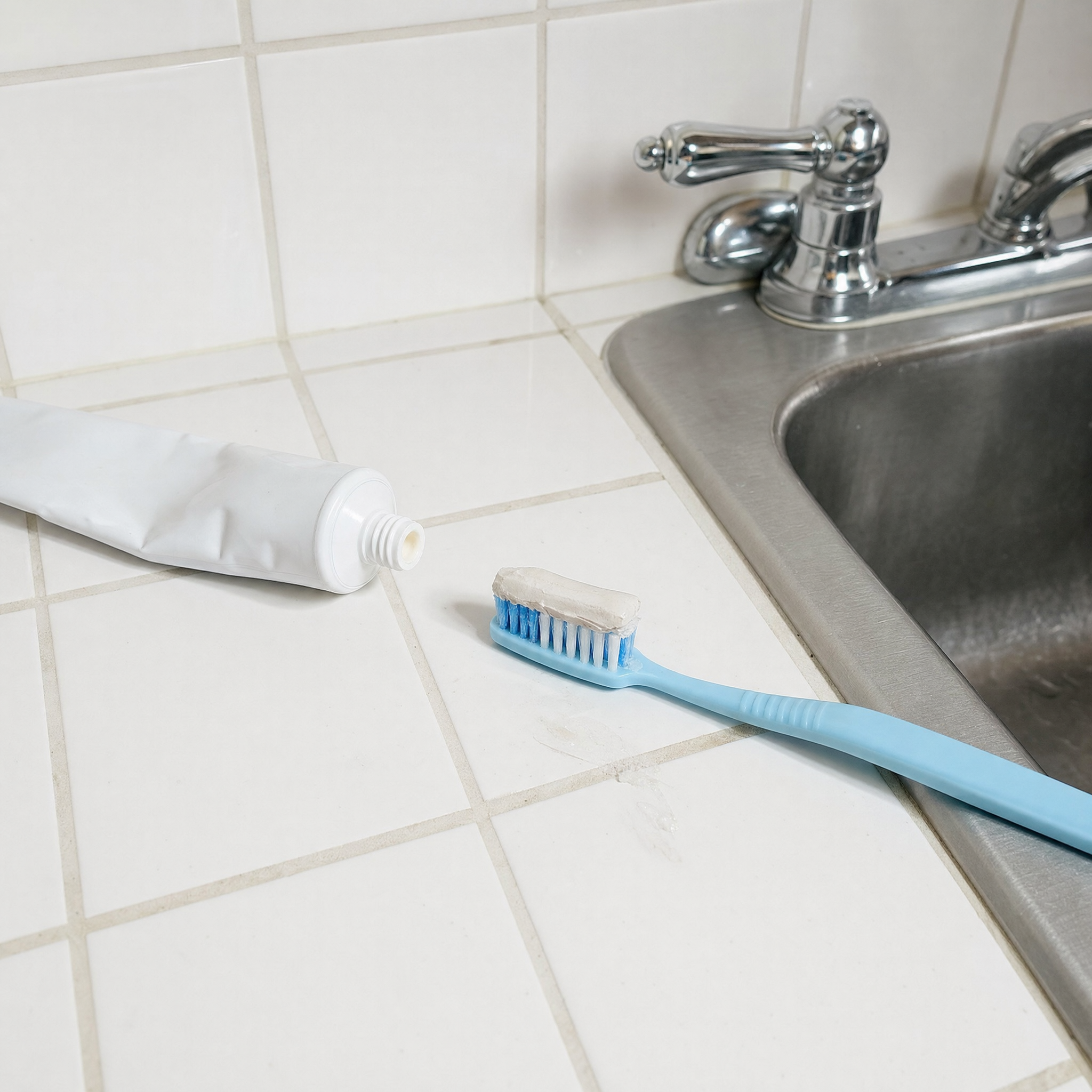
His toothbrush was on the counter. The paste was already on it, a full stripe, and the stripe was dry at the edges. It had been sitting there long enough to dry.
He was standing next to it. He was not hiding, not playing, not talking back. He was just standing there, hands at his sides, staring at nothing.
He had picked it up, put the paste on, set it down, and stopped. Somewhere between the paste and his mouth, the morning had left him. He had not refused. He had not started.
"Bud," I said. He looked at me slowly. "I think I'm still asleep," he said, and he said it soft, not smart, not angry.
And I yelled anyway.
I yelled about the time, and the shoes, and how many mornings we had done this, and how I could not do it one more day. He picked up the brush with his shoulders up around his ears. He did not say another word.
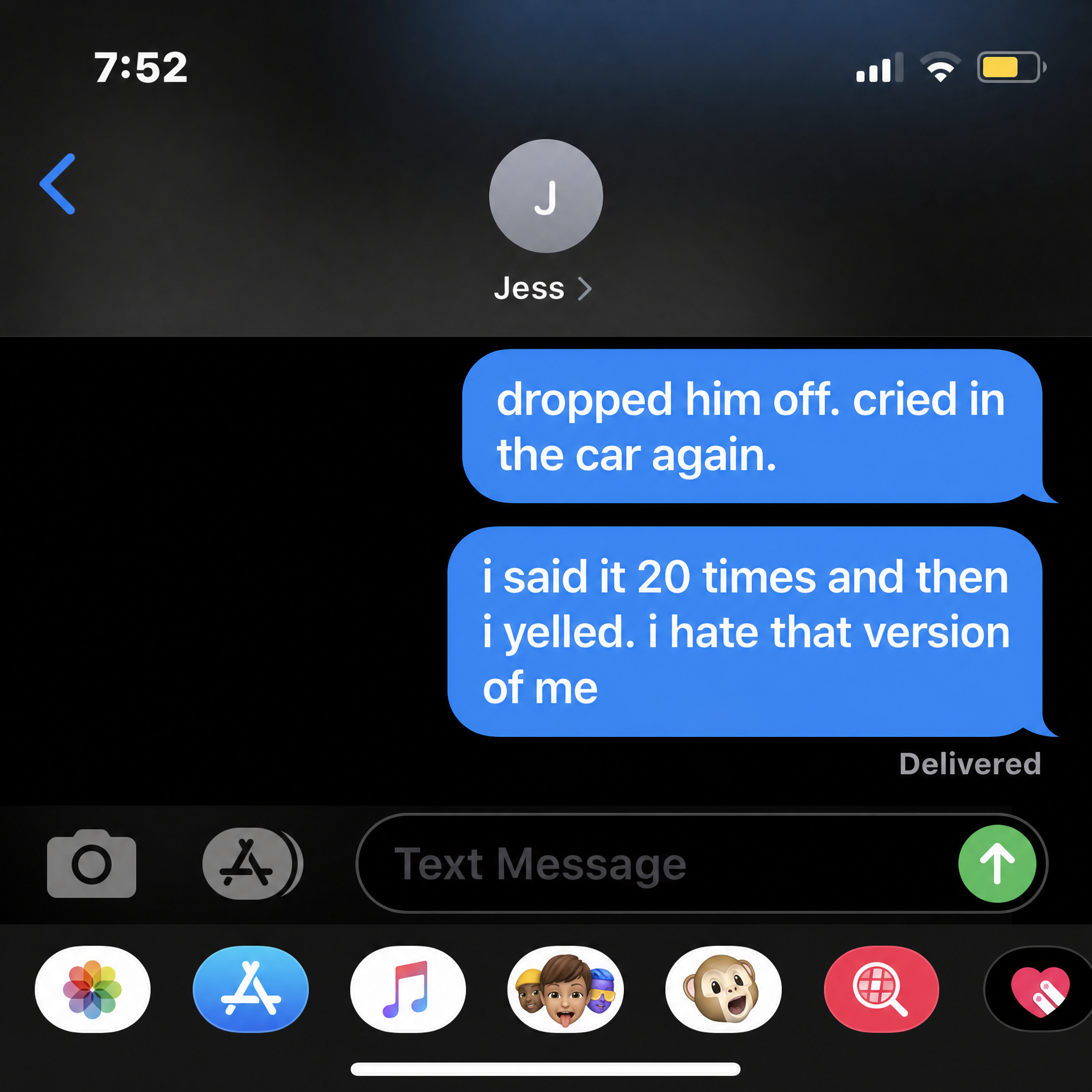
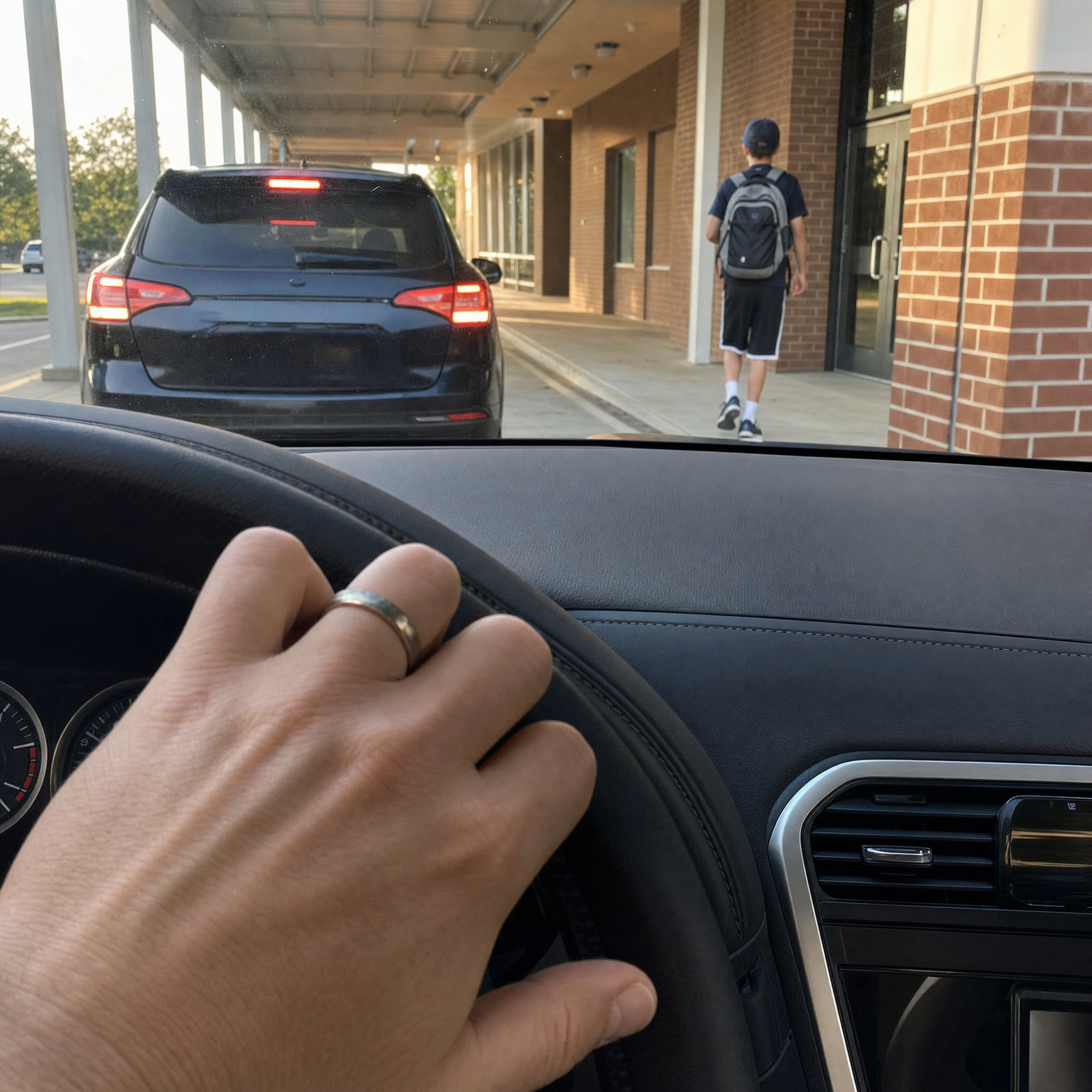
I said sorry at the door, hand on his backpack. Then I drove him to school. I cried the whole way there, and I screamed once at my windshield after he got out.
I cried at the light by the gas station and in the lot at work. I sat at my desk with the door shut for ten minutes. Then I did payroll.
I could not stop seeing that dry stripe of toothpaste. He had done everything up to the part where you move. And I had yelled at the part where he could not.
That night I wrote a post in this group. It was long and it was not pretty. I put the toothbrush in it and the yelling and the sorry.
I wrote that I had tried all of it and I did not know what was left. I hit post at 10:52 and lay there. At 11:15 a woman named Dana answered.
She said she had been a pediatric nurse for 19 years, the last 8 in a sleep clinic for children, and that her own son has ADHD and is grown now. Then she asked one question. "How does he get woken up in the morning?" she asked.
I typed my answer. It took me two lines, and I remember thinking it was a strange question to ask.
"That is where I would start," she wrote back. "Not the teeth. Not the shoes. The first minute." She gave me her number and asked if I wanted to talk.
I called her from the laundry room at 9:00 the next night with the dryer running. She picked up on the second ring, and I could hear her set her coffee down.
"Tell me about the toothbrush," she said first. So I told her. She went quiet for a second when I got to the dry stripe.
"I have watched more families than I can count do exactly what you did this week," she said. "I did it myself for years with my own boy. You are not a bad mom. You are a mom fighting the wrong minute."
"Can I get a little technical for a minute?" she asked. "Please," I said. I sat down on the dryer.
"How he gets woken decides the state he starts the day in," she said. "Not what he eats, not the chart. The first minute."
"Think about a loud alarm," she said. "It is a noise that fills the room and yanks him out of sleep. His body does not know it is a clock. His body thinks something is wrong."
"Now think about a parent at the door," she said. "It is an order, landing on a kid who is still half asleep. Sit up, get up, come on, we are late."
"Both of those spike his stress hormones before his feet hit the floor," she said. "Both of them. He starts the day in fight or flight. He is not awake yet and he is already in a fight."
"So it is not the teeth," I said. "It is before the teeth." "It is before anything," she said. "How he comes up matters. Hold that thought."
I stared at the dryer. I thought about every morning of my life for three years. I did not say anything for a while, and she let me.
"That is the root," she said. "Everything else you told me comes after that minute. Are you still with me?"
"I'm with you," I said. My voice was not steady.
"Second part," she said. "An ADHD brain takes longer to come back down from that spike. A lot longer. So he spends the first hour flooded."
"Flooded means what?" I asked. "It means his body is still on high alert," she said. "And a flooded kid cannot start a step. He can hear you. He cannot begin."
"So the instruction lands and nothing happens," she said. "So you repeat it. And you repeat it. And your voice goes up, because you are a human being."
"And when your voice goes up, his fight response spikes again," she said. "Right on top of the first one. So the yell is not where the morning goes wrong. The yell is where the wake-up fight ends. An hour after it started."
"So why does the yell work, then?" I asked. "He moves when I yell." "Because fear moves a body," she said. "It moves it once. And it costs you the next morning, because now his body knows what is coming."
I felt sick. Not the guilty sick I knew. Another kind of sick, the kind where something you have stared at for years turns into something else.
"The toothbrush," I said. "He picked it up. He put the paste on. And then he stopped." "He was flooded," she said. "The paste got on. The next step did not come. Kids do well when they are able to. He was not able to at 7:10."
I heard her take a sip and set the cup down again. "Your calm is his calm," she said. "It runs both ways. You already know that part. Your threads are right about it."
"But calm is not something you can hand him at 7:10," she said. "It has to be there when he opens his eyes. Once it is gone, you cannot get it back for an hour. Yours either. That is why you carry it to work."
That is why getting up earlier held right until nothing moved. I was calm. He was still startled awake and ordered up, and I was standing there calm, watching it not work.
"I tell parents it this way," she said. "Waking him with noise or an order is throwing cold water on him, then handing him his shoelaces and expecting a bow."
"And then we get mad about the bow," she said. I wrote cold water, then shoelaces, on the back of an envelope on the dryer.
"Third part," she said, and I heard a door close on her end. "This is the one I want you to hear. Every morning that starts as a fight teaches his body that mornings are a fight. His body remembers, even when he does not."
"Kids with ADHD are harder to wake in the morning. That's a 2009 review of 16 studies." She let that sit. "So it is not you and it is not him. It is how his brain comes up out of sleep, and it means the first minute matters more for him than for most kids."
"And the harder he is to wake, the louder the wake-up gets, in most houses," she said. "So the kid who needs the gentlest start gets the roughest one. Every day. For years."
I thought about the grown man in the thread whose mother cried in the driver's seat. I thought about what my son's body had learned about mornings from me. That was every morning of his life so far.
"So what does he remember?" I asked. She went quiet for a second. "Not the reminders," she said. "The way it felt. That stays, if you let it keep going. It stayed with mine for a while."
"Is it too late?" I asked. My voice cracked on the word late. "No," she said. "Bodies learn new things. But you have to change the minute, not the volume."
"What does a good first minute look like?" I asked. "Small," she said. "Quiet. Something he feels and nobody else does. No startle. No order. He sits up because he decided to, not because someone told him to."
"Then nothing spikes," she said. "He comes up with a clearer head and a calmer nervous system. A calmer kid gets lost between fewer steps. And you say teeth a lot fewer times."
I looked at my envelope. I thought about how many things I had tried that never once touched that minute. I felt stupid and relieved at the same time.
"Now tell me everything you tried," she said. "In order. I bet I can tell you which piece of the morning each one fixed and which piece it missed."
"Getting up at 5:30," I said. "Eight months of it." "Good instinct," she said. "You fixed your half of the morning. You were calm at 6:40, and I bet it helped for about ten minutes."
"Then he was still startled awake and still ordered up," she said. "Your calm cannot reach a body that is already spiking. You got calm. He never got the chance to."
"The timer," I said. "The chart. The rainbow clock." She laughed, kind. "I have a drawer of those. They are good tools for a kid who is up. They organize the steps."
"But a kid cannot start a step while he is flooded," she said. "The clock told him what came next. It could not make him able to begin. Good list. Wrong hour."
I thought about him telling me what the colors meant while not moving. He knew the plan. His body could not run it.
"Saying it once, in the calm voice," I said. "I lasted four days." "Four days is longer than most," she said. "And it is a real thing. Volume matters."
"But you changed the volume of the order, not the state it lands on," she said. "A whispered order on a flooded kid is still an order on a flooded kid. A quiet order is still an order."
"Connection over correction," I said. "Sitting with him. Being on his side first." "Keep doing it," she said. "It is the best thing on your list."
"It just comes too late in the morning," she said. "Connection helps a kid who is up. By the time you sit with him, the fight already happened. Right instinct, wrong target."
"Body doubling," I said. "I stayed in the room for every step. It went from all yelling to mostly yelling." "That is real progress," she said. "Company helps."
"But you got in the room after the wake-up did its work," she said. "You were doubling a kid who was already flooded. Company helps a kid who is up. It cannot undo how he came up."
I said nothing for a second. She waited. I could hear her refill her cup.
"The forums," I said. "Three years of reading at 11 p.m." "Those threads are full of good people," she said. "I am one of them. And almost every thread starts at get dressed."
"Nobody writes about the minute before get dressed," she said. "You were reading the right people about the wrong minute."
"Letting him fail," I said. "Everyone says it." "It works for some kids," she said. "A kid who is calm can feel a consequence and learn from it."
"A flooded kid cannot feel it yet," she said. "You are asking him to learn from something his body cannot take in. And at 7:25 it still ends with you at the door. You cannot teach a lesson to a body in fight or flight."
I looked at my list on the envelope. Every line had a mark through it now. I had not crossed them off. She had, gently, one at a time, and I agreed with every single one.
"So what do you actually do?" I asked. "With your own son. What did you do?" She laughed, and I heard her sit down.
"I got myself out of the wake-up years ago," she said. "I am not in his doorway anymore. I have not been for a long time."
"He wears a wristband to sleep," she said. "It vibrates at the time he sets. No sound. Nothing in the room but a buzz on his own wrist that only he can feel."
"It does not startle him and it does not tell him to do anything," she said. "He feels it, sits up, and turns it off himself. So the first thing he does in his day is his own. Not an order from a doorway."
"No startle and no order, so there is nothing to spike," she said. "He comes up with a clearer head and a calmer nervous system. And a calmer kid gets lost between fewer steps."
"What is it called?" I asked. "Hold on," she said. "I will type it so you spell it right." My phone buzzed in my hand. Two words. Dawn Band.
"Not a fitness watch," she said, before I could ask. "A tracker is built to tell you something and move on. Parents tell me the same story every time. It buzzed for two minutes, gave up, he went back under, and she was back at the door. So the order came right back."
"And a smartwatch is his phone on his wrist," she said. "The first thing in his day would be a screen. That is a different order, but it is still an order."
"It is the one I tell parents to get," she said. "It does not stop on its own. It keeps going until he sits up and turns it off himself. It is the only buzz in the house that does not give up before he does. Not a phone, not a smartwatch, one small band that does one thing, and nobody at the door."
I looked it up right there in the laundry room. Dawn Band is a small company and this band is the only thing they make. They make it in small runs, so it goes out of stock, and it happened to be in stock that night.
The page said it was trusted by 10,000+ parents. I had never heard of them. I had never heard of any of this, and I almost closed the page.
Then I saw they give you sixty nights and refund you if it does not work on your kid. That is what got me. I have bought enough charts and clocks with no way back.
I ordered it at 9:48 with my thumb shaking. Then I went upstairs and looked at him asleep and said sorry one more time, to a sleeping kid, for the toothbrush.
It came in a small box the next Wednesday. He wore it to bed that night. And for a week, almost nothing happened.
Week one. Almost nothing. Maybe he was sitting up when I looked in. Maybe. I could not tell if it was the band or if he had heard me in the hall.
I still said get dressed over and over. I still said teeth. I did not yell on Thursday, and I did not know why, and then I yelled on Friday and hated myself again.
I almost sent it back that weekend. Dana had said to give it three weeks before I decided anything. I gave it three weeks.
Week two. Tuesday morning, 6:52. I was in the kitchen with the lunch half packed and I heard water running upstairs.
The bathroom tap. He had turned it on before I said a word. It was the first morning in 3 years that I heard that tap before I said the word teeth.
I stood there with a sandwich bag in my hand. I did not go up. I did not say anything. I let him have it.
That was one morning. The rest of the week was mostly the old week. But it had happened once, and I could not stop thinking about it.
Week three. Wednesday. I had my coffee in my hand and I realized I was sitting at the table, and the coffee was hot. I had not sat down in the mornings in two years.
I had not noticed myself sit. That was the strange part. My body had done it before my head caught up, because for the first time in a long while I was not braced for anything.
Dana had said my calm was his calm and it ran both ways. I had thought that meant I had to make myself calm for him. That morning it ran the other way. He came up quiet and I came down quiet.
Week four. I started counting, because I did not trust myself. Teeth on the first ask, 4 mornings out of 5. Zero yells in 5 school days.
I still said get dressed twice on Monday. I still said teeth twice on Thursday and once on Friday. I still stood in the hall. But my voice stayed where it started, all week.
The numbers were not perfect. Four out of five is not five out of five. It was the first week in three years I could count the repeats on one hand.
Week five was more of the same, with one bad Wednesday where I got sharp about the shoes. Sharp, not yelling. I still said sorry at the door for it, and I meant it.
Week six. He said something on the drive to school on a Tuesday, looking out the window. "You don't do the loud voice anymore," he said. "It's kind of weird." I laughed so I would not cry.
That same week Carla, who sits at the desk next to mine, put her coffee down and looked at me. "You haven't come in with that face in a while," she said. "The 8:15 face."
I told her about the band, and I told her what Dana told me. Cold water, then shoelaces. She got it in one sentence, the same way I had.
Week seven I stopped counting for a few days and then started again. The numbers were the only thing that made me believe it.
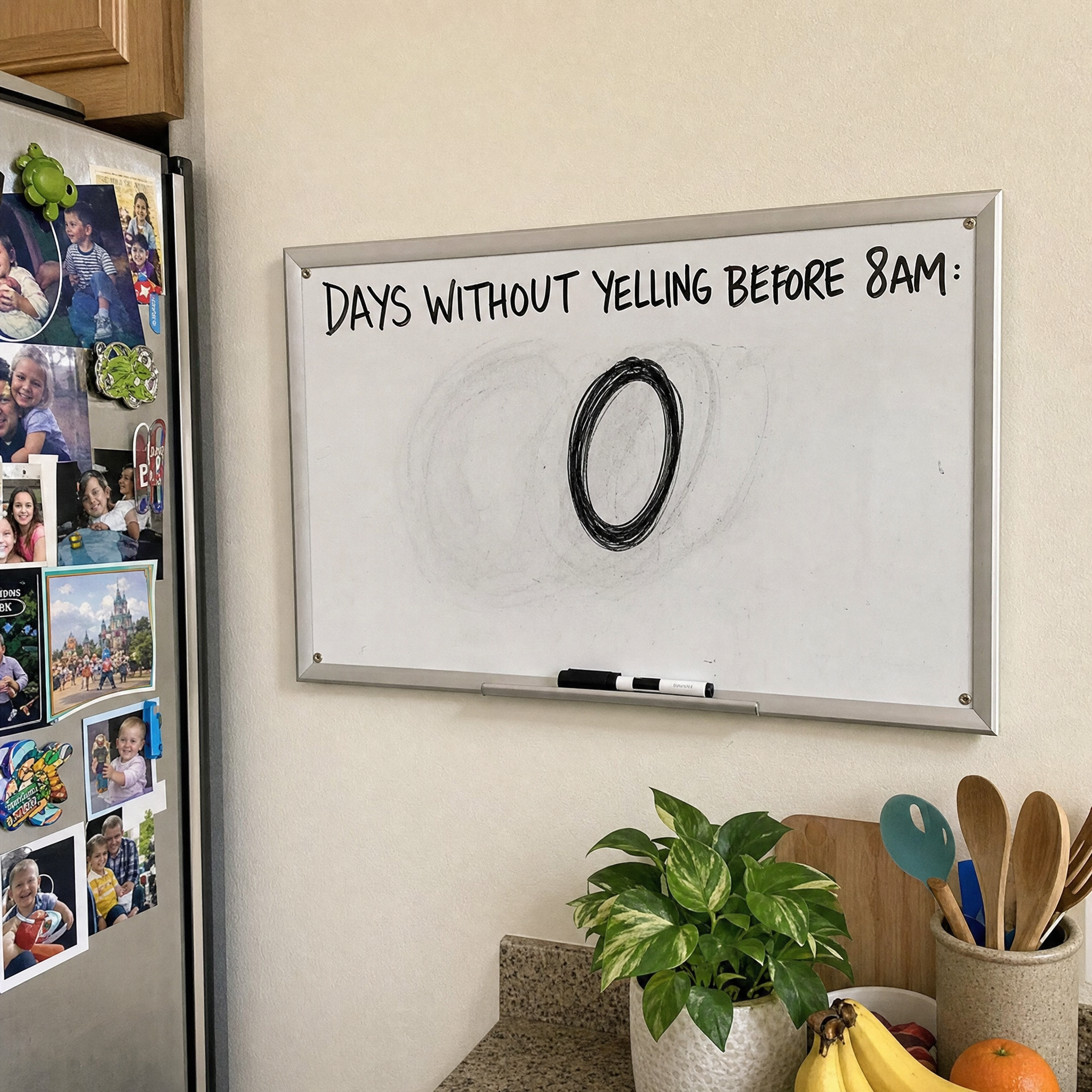
Week eight. Twenty-five school mornings in a row without a yell. Seventeen in a row without a sorry at the door. The tally is on the back of the same envelope.
And then a Tuesday, 6:55. I walked past the bathroom on my way to grab his lunch bag, and the tap was running.
The toothbrush was not on the counter. It was in his mouth. The paste was where it belonged, and he was looking at himself in the mirror, half awake and brushing.
"Morning," I said. That was my first word to him. Not teeth. Not come on. Just morning.
He nodded at me in the mirror with the brush going and kept at it. I went downstairs and sat at the table and drank my coffee while it was hot.
At the door I put my hand on his backpack the way I always do. I opened my mouth to say sorry, out of three years of habit. There was nothing to say sorry for, so I said, "Have a good day, bud."
"You too," he said. He has said that six mornings in a row now. I am keeping count of that one too.
I keep thinking about what he would have remembered. Not the charts, not the calm voice I tried for four days. The version of me at 7:10, in the bathroom door, at the top of my lungs.
I was teaching his body that mornings are a fight. Three years of it, every school day, on a kid who is harder to wake than most and needed the softest start of anyone in the house. I came very close to making that permanent.
I am not going to tell you it was a miracle. I am telling you what happened in my house. Some mornings I still say teeth twice, and one morning last week I was sharp about the shoes.
If it does not work on your kid, you send it back and they give you your money back. Sixty nights, all of it. That is the only reason I tried it, and it is the reason I can tell you to.
100% money-back guarantee. 60 nights.
If by week two you hear the tap running before you say a word, you will know what I felt with that sandwich bag in my hand. You will stand still and let him have it.
If by week four you are counting the mornings without a yell, you will not believe your own count. Write it on something you can keep.
If by week six your kid tells you that you do not do the loud voice anymore, you will laugh so you do not cry. I did.
If by week eight your first word to him is morning, and there is nothing to say sorry for at the door, you will think about the toothbrush. You will wish you had started tonight.
👉 https://dawnbands.com/products/wake-up-band-adhd
You can keep doing what you have been doing. Getting up before the sun, saying it once, staying in the room, reading the threads in the dark and swearing you will not yell tomorrow. I did that for three years, and I know exactly where it ends, because I stood in that bathroom door.
Or you can change the first minute. Not the volume, not the chart. The way he comes up out of sleep, on an ordinary Tuesday, with sixty nights to find out and nothing to lose but the sorry at the door.
Thank you for reading all of this. I know it was long. I know you might be reading it in bed with your phone in your hand, which is exactly where I was when Dana answered me.
He is going to remember something about his mornings with me. I finally get a say in what it is.
Jen
P.S. His toothbrush was on the counter with the paste already on it, dry at the edges, and he was standing next to it, not started. I yelled at a kid who could not move yet. I cannot un-see it, and I do not want to.
P.P.S. Three years of yelling most school mornings. Eight weeks with the band. Twenty-five school mornings in a row without a yell, seventeen without a sorry at the door, and teeth on the first ask 4 mornings out of 5 by week four. I still say it twice some days.
P.P.P.S. Dawn Band makes these in small runs and they go out of stock. I checked the page twice before I ordered and once after, and it was gone the week after mine came. If it is in stock when you read this, do not wait for a better night. There is not one.
👉 https://dawnbands.com/products/wake-up-band-adhd